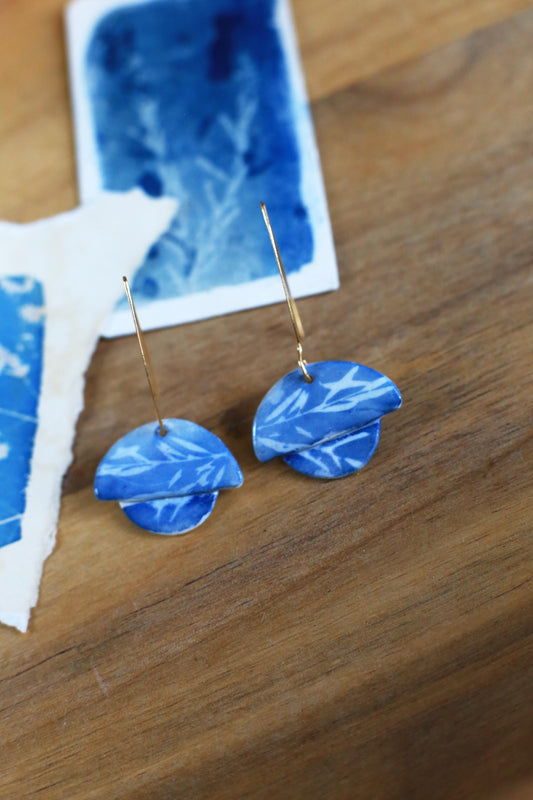
Collection: Sun-prints
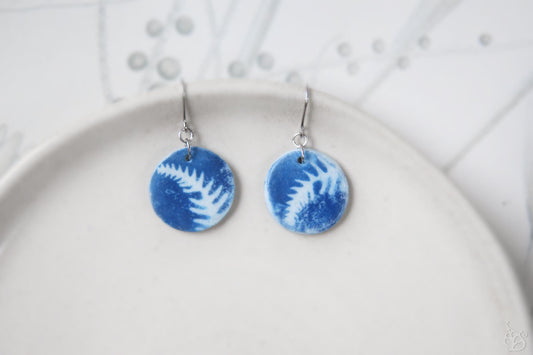
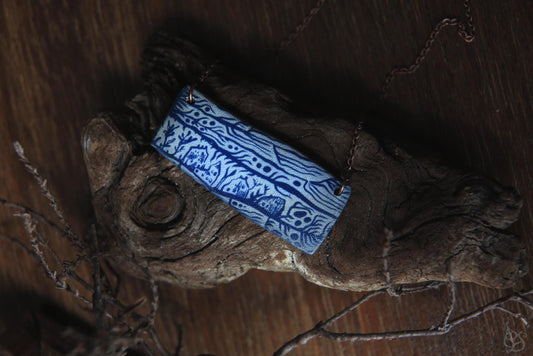
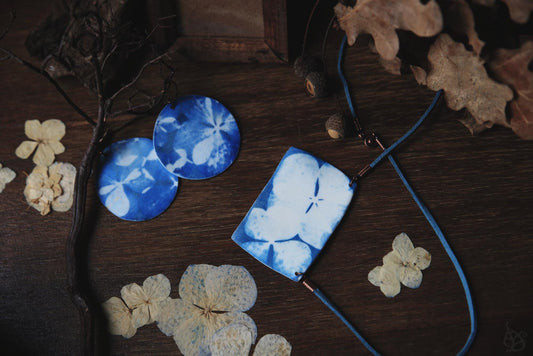
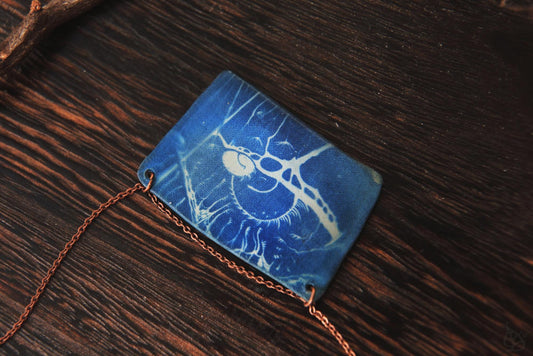
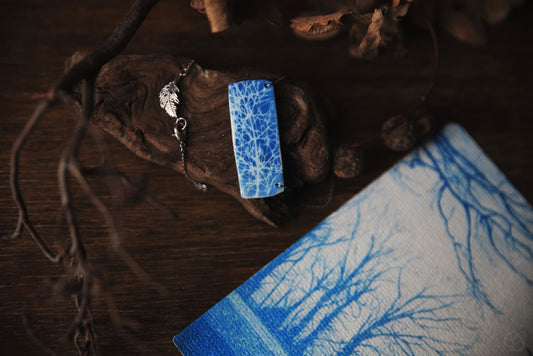
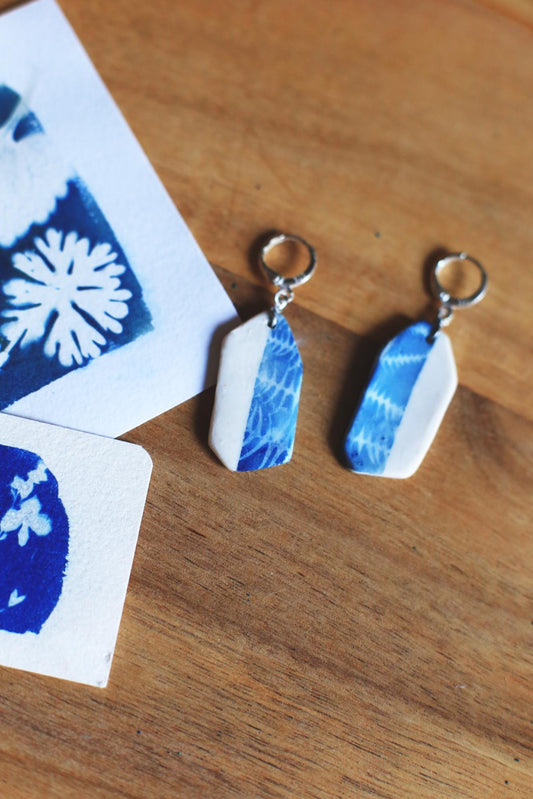
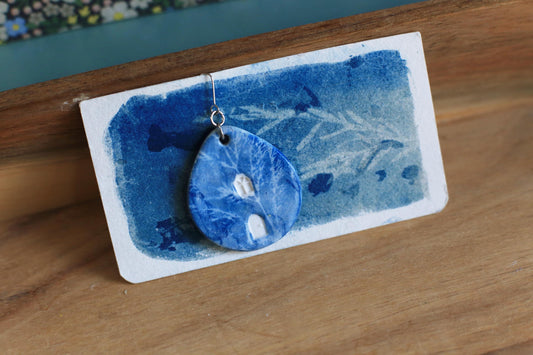
The cyanotype technique or sun-printing is a handcrafted process that allows to develop an image with a combination of chemical dye and sunlight. The invention of this method is attributed to John Frederick William Hershel, an astronomer and physicist, who introduced cyanotypes in the 1800s. The term "cyanotype" comes from the Greek - kuáneos, "dark blue" + τύπος - túpos, "mark, impression, type". Unlike traditional photography using silver salt, cyanotypes rely on a slow-reacting formulation containing iron salt, which produces the famous Prussian blue colour when exposed to near-ultraviolet and blue light.
In my artwork I apply cyanotypes over paper and ceramics, using my own method developed for vitrified porcelain. These images are created with hand-picked plants and objects, as well as my own photographs and graphic illustrations. Sometimes I finish the print with additional tea-leaf tint that creates a darker, more muted shades of blue and brown. And since I use the natural sunshine for most of my creations, I like to muse about how each piece also carries a memory of sun rays reaching our planet on a specific day.

-
Cyanotype Geranium / Porcelain Pendant
Regular price €46,00 EURRegular price -
Fougères / Cyanotyped Porcelain Jewelry Set
Regular price €52,00 EURRegular price -
Going Home / Porcelain Cyanotype Necklace
Regular price €41,00 EURRegular price -
Hydrangea / Porcelain Cyanotype Set
Regular price €44,00 EURRegular price -
Monster Lullaby / Porcelain Necklace
Regular price €38,00 EURRegular price -
Subtlety / Porcelain Cyanotype Necklace
Regular price €47,00 EURRegular price -
Seaweed After Fire / Porcelain Cyanotype Earrings
Regular price €35,00 EURRegular price -
Fern Halves / Cyanotype Porcelain Earrings
Regular price €35,00 EURRegular price -
Leaf Structured / Porcelain Brooch
Regular price €30,00 EURRegular price -
Meadow Home / Porcelain Cyanotype Earrings
Regular price €38,00 EURRegular price -
Meadow Art / Cyanotype Porcelain Jewellery Set
Regular price From €35,00 EURRegular price -
Botanical Club / Porcelain Cyanotype Earrings
Regular price €38,00 EURRegular price